The Vintage Rolex Field Guide: An Overview
Navigating the world of vintage Rolex collecting requires knowledge; this guide offers essential insights into authenticity, terminology, and the nuances of these iconic timepieces.
Understanding the Allure of Vintage Rolex
The fascination with vintage Rolex watches stems from a confluence of factors, blending horological excellence with historical significance and enduring style. These aren’t merely time-telling devices; they represent a tangible connection to the past, embodying eras of exploration, innovation, and refined taste. The appeal extends beyond investment potential, though that’s certainly a consideration for many collectors.
Early Rolex models, particularly those associated with pioneering adventures, carry a romantic aura. The mystique surrounding these watches is amplified by the challenges of collecting – identifying authentic pieces, understanding variations, and navigating a market susceptible to fakes and modified components. This complexity, however, adds to the thrill of the hunt and the satisfaction of ownership.
The enduring design language of Rolex, coupled with the robust construction of their movements, ensures these watches remain functional and aesthetically pleasing decades after their creation. It’s a legacy built on quality and a timeless aesthetic that continues to captivate watch enthusiasts worldwide.
The History of Rolex and its Early Models
Rolex’s origins trace back to 1905, founded by Hans Wilsdorf with a vision to create reliable and precise wristwatches – a relatively novel concept at the time, dominated by pocket watches. Early efforts focused on achieving waterproof cases, a significant challenge in the 19th and early 20th centuries, with Dennison, a British firm, playing a role in these initial developments.
The company quickly gained recognition for innovation, introducing the self-winding Perpetual rotor in 1931, a groundbreaking advancement. Early models like the Oyster, launched in 1926, were pivotal in establishing Rolex’s reputation for durability and precision. These watches were subjected to rigorous testing, including surviving the English Channel swim, solidifying their waterproof claims.
The post-war era saw the emergence of iconic models like the Submariner and GMT-Master, designed for specific professions and lifestyles, further cementing Rolex’s place in horological history. These early iterations laid the foundation for the highly sought-after vintage references collectors pursue today.

Key Vintage Rolex Models

Iconic references like the Submariner, GMT-Master, and Daytona represent the pinnacle of vintage Rolex design and engineering, highly prized by collectors worldwide.
Submariner (Reference 5513, 1680, 6538)
The Rolex Submariner is arguably the most recognizable dive watch ever created, and vintage examples are incredibly sought after. References 5513, 1680, and 6538 each represent distinct eras and features. The 6538, with its “big crown” and Bakelite bezel, is an early and exceptionally rare model. The 5513, produced from 1962 to 1989, offers a classic aesthetic and is considered a cornerstone of the Submariner lineage.
Later, the 1680 introduced the date function and a more robust movement. Variations within these references – dial colors, hand styles, and bezel inserts – significantly impact collectibility. Understanding these nuances is crucial for identifying authentic examples and assessing their value. A Submariner’s history, including service records and originality of parts, greatly influences its desirability among collectors.
GMT-Master (Reference 1675, 16750)

The Rolex GMT-Master, designed for Pan Am pilots, quickly became a symbol of transcontinental travel and remains highly collectible today. Reference 1675, produced from 1959 to 1980, is the original GMT-Master, featuring a 24-hour rotating bezel for tracking multiple time zones. Early models often showcase “Pepsi” bezels (red and blue), though variations with all-black or faded inserts exist, impacting value;
The 16750, introduced in the 1980s, represents a transitional phase, with a slightly updated movement and case. Collectors scrutinize details like dial variations (gilt vs. matte), hand sets, and bezel insert fonts. Authenticity is paramount, as the GMT-Master is frequently targeted by counterfeiters. A well-preserved GMT-Master with original components represents a significant investment.
Daytona (Reference 6239, 6263, 6265)
The Rolex Daytona, synonymous with racing and Paul Newman, is arguably the most coveted vintage Rolex. Reference 6239, the first automatic Daytona, debuted in 1965, followed by the 6263 with an external tachymeter scale. The 6265, introduced later, featured a slightly modified dial. “Paul Newman” Daytonas, characterized by exotic dials, command exceptional prices due to their rarity and association with the actor.
Authenticity is a major concern with Daytonas, as they are heavily faked. Collectors meticulously examine case details, dial fonts, and movement characteristics. Service history and the presence of original parts significantly influence value. The longer time passes, the more important it is to verify originality and avoid “Frankenwatches” – assembled from non-original components.

Decoding Vintage Rolex Terminology
Vintage Rolex collecting involves unique terms like “Frogfoot” and “Gilt,” requiring understanding to navigate discussions and accurately assess watch details and value.
“Frogfoot” Hands and Gilt Dial Variations
The term “Frogfoot” refers to a specific hand style found on early Rolex Submariners (specifically 5513 and 6538), characterized by their distinctive, wide triangular luminous plots resembling frog’s feet. These hands are highly sought after by collectors, significantly impacting a watch’s value. Gilt dials, prevalent in the 1950s and early 60s, feature gold-toned printing that appears to shimmer; this is due to the application of gold to the dial’s text and markers.
Variations within gilt dials exist, including differences in font styles and the presence or absence of specific markings. The condition of the gilt printing is crucial – fading or degradation diminishes collectibility. Understanding these nuances is vital when evaluating vintage Rolexes, as these details contribute substantially to their historical significance and market worth; Identifying these features requires careful observation and often, magnification.
The Significance of Serial and Reference Numbers
Rolex serial and reference numbers are crucial for determining a watch’s age, model, and originality. The reference number, typically found between the lugs at 12 o’clock, identifies the specific model (e.g., 5513, 1675). Serial numbers, located between the lugs at 6 o’clock, indicate the year of manufacture, though decoding these requires referencing production charts and databases.
These numbers help verify authenticity and can reveal if components have been replaced or altered. A mismatch between the serial and reference number, or the presence of a poorly stamped number, is a significant red flag. Collectors rely on these numbers to trace a watch’s history and confirm its provenance. Understanding the Rolex numbering system is fundamental to responsible vintage Rolex collecting, ensuring informed purchasing decisions.
Understanding Caseback Markings and Codes
Rolex casebacks often bear markings providing valuable clues about a watch’s history and originality. These markings can include reference numbers (sometimes repeated from between the lugs), serial numbers, and various codes indicating the case manufacturer and year of production. Early casebacks might feature hallmarks or engravings related to specific retailers or military contracts.
Decoding these codes requires specialized knowledge and access to reference materials. The presence of incorrect or altered markings is a strong indicator of a potentially fake or heavily modified watch. Collectors carefully examine caseback details to verify authenticity and assess the watch’s overall condition. Understanding these subtle details is essential for discerning genuine vintage Rolexes from those that have been compromised or misrepresented.
Identifying Authenticity and Red Flags
Authenticity is paramount; spotting fake components, frankenwatches, and the impact of servicing are crucial when evaluating a vintage Rolex’s value and integrity.
Spotting Fake Rolex Components
Identifying counterfeit parts is a significant challenge in the vintage Rolex market. Many replicas focus on visual similarities, often neglecting the intricate details that define genuine components. Dial scrutiny is essential; look for crisp printing, correct fonts, and luminous material consistency – often a giveaway.
Hands are frequently replicated, but subtle differences in shape, finish, and material can reveal a fake. Crown and crystal quality are also key indicators; genuine Rolex crowns exhibit precise machining and a solid feel, while crystals should have specific markings.
Movement examination, ideally by a qualified watchmaker, is crucial. Fake movements often lack the refinement and precision of authentic Rolex calibers. Be wary of heavily polished cases, as excessive polishing can obscure fake hallmarks or damage original details. Thorough research and expert consultation are vital to avoid costly mistakes.
Recognizing Frankenwatches and Modified Parts
“Frankenwatches” – assembled from non-original parts – pose a considerable risk to collectors. These timepieces often appear genuine at first glance, but lack the historical integrity of an all-original watch. Identifying non-period-correct components requires deep knowledge of Rolex’s production history and variations.
Modified parts, even seemingly minor alterations, significantly diminish a vintage Rolex’s value. Over-polishing, refinished dials, or replaced hands are common modifications. Scrutinize case details, dial feet holes, and movement signatures for signs of tampering.
The longer time passes, the more prevalent these issues become due to servicing and DIY repairs. Documented provenance and a reputable seller are crucial when assessing a vintage Rolex, ensuring its components align with its stated age and reference number. Careful examination is paramount.
The Impact of Servicing on Vintage Value
Servicing a vintage Rolex is a double-edged sword; while essential for functionality, it can significantly impact collectibility and value. Original, untouched examples often command a premium, reflecting their unadulterated state. However, a well-documented service history from a reputable watchmaker can also be reassuring.
Over-servicing, or using non-original replacement parts during maintenance, diminishes a watch’s originality. Polishing the case, for instance, removes metal and alters the original shape, reducing its value. Similarly, refinished dials are generally less desirable than original, albeit potentially aged, dials.
Collectors often prioritize originality over perfect working order. Therefore, understanding the service history – or lack thereof – is crucial when evaluating a vintage Rolex. Transparency from the seller is key to making an informed decision.
The Rolex Oyster Bracelet: A Deep Dive
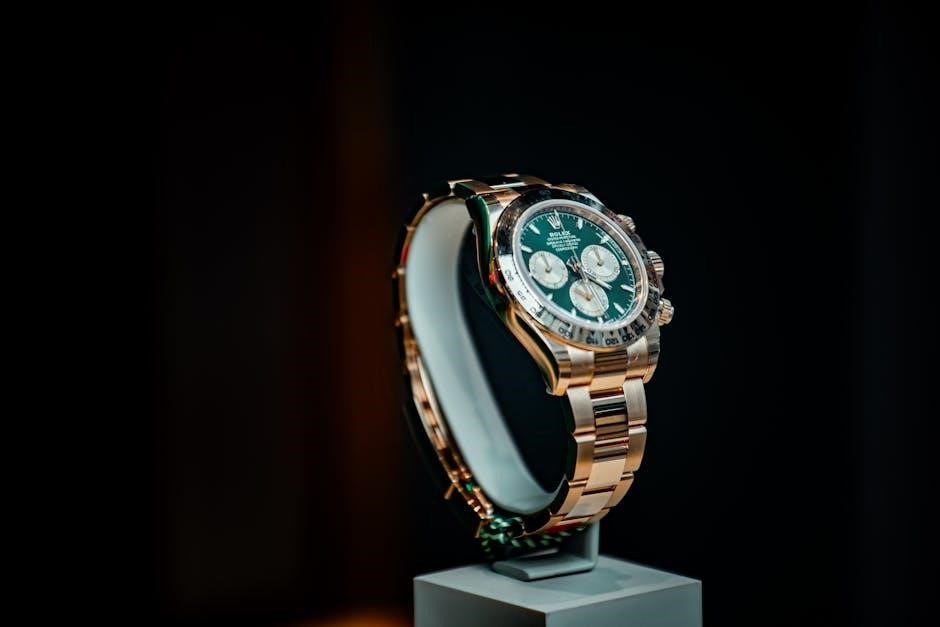
The Oyster bracelet is integral to Rolex’s history, particularly with the Submariner. Bracelet codes and clasp styles reveal dating information, aiding in authentication and valuation.
Bracelet Codes and Dating
Decoding the bracelet codes stamped on the clasp is crucial for establishing a vintage Rolex’s age and originality. These codes, typically found on the inside of the clasp, provide valuable clues about the bracelet’s manufacturing period. Understanding these markings allows collectors to verify if the bracelet is period-correct for the watch head, a significant factor in determining value and authenticity.
Early Oyster bracelets featured simpler codes, evolving over time to become more complex. The codes often indicate the year of manufacture, and sometimes even the specific quarter. Identifying the bracelet manufacturer is also possible through these markings, as Rolex sourced bracelets from various companies throughout its history. Careful examination and cross-referencing with established dating charts are essential for accurate interpretation. A bracelet’s code should align with the watch’s production date for a genuine, original pairing.
Variations in Clasp Styles
Vintage Rolex Oyster bracelets showcase a fascinating evolution of clasp designs, reflecting changing aesthetics and functionality over the decades. Early clasps were often simpler, featuring minimal branding and basic locking mechanisms. As time progressed, Rolex introduced more elaborate clasps with increased security features and refined finishes.
Collectors pay close attention to clasp variations, as they can significantly impact a bracelet’s desirability and value. Certain clasp styles are specific to particular production years or reference numbers, making them highly sought after by enthusiasts. Variations include different types of locking mechanisms, engravings, and the presence or absence of specific markings. Identifying these subtle differences requires a keen eye and detailed knowledge of vintage Rolex bracelet history. The clasp style, alongside the bracelet code, contributes to establishing a bracelet’s authenticity and period correctness.
Condition and Collectibility
A vintage Rolex’s condition profoundly impacts its collectibility and value; rarity and demand dictate pricing, alongside originality and service history.
Grading Vintage Rolex Watches
Assessing a vintage Rolex’s condition is crucial for determining its value and desirability among collectors. There isn’t a universally standardized grading system, but common terms provide a framework for evaluation. “Pristine” or “Mint” signifies near-flawless condition, retaining original finish and showing minimal wear – exceedingly rare for older watches. “Excellent” indicates very light wear, with sharp case lines and a well-preserved dial.
“Very Good” suggests noticeable wear, perhaps with softened edges or minor dial blemishes, but still presenting well. “Good” denotes significant wear, potentially including refinished cases or replaced parts, while “Fair” indicates substantial condition issues. Collectors often prioritize originality; heavily polished cases or replaced dials diminish value. Understanding the extent of any restoration or component replacement is vital when evaluating a vintage Rolex, as it directly impacts its collectibility and price point.
Factors Affecting Value: Rarity and Demand
The value of a vintage Rolex is fundamentally driven by the interplay of rarity and collector demand. Limited production runs, unique dial variations (like “tropical” dials), and specific historical significance dramatically increase desirability. Certain reference numbers, like those with specific features or associated with notable figures, command premium prices. Demand fluctuates based on market trends and collector preferences; some models experience surges in popularity while others remain stable.
Originality is paramount; watches retaining all original components generally fetch higher prices. The condition, as previously discussed, significantly impacts value, with pristine examples commanding substantial premiums. Provenance – a documented history of ownership – can also elevate a watch’s worth. Ultimately, a vintage Rolex’s value is determined by what a willing buyer is prepared to pay, influenced by these interwoven factors.