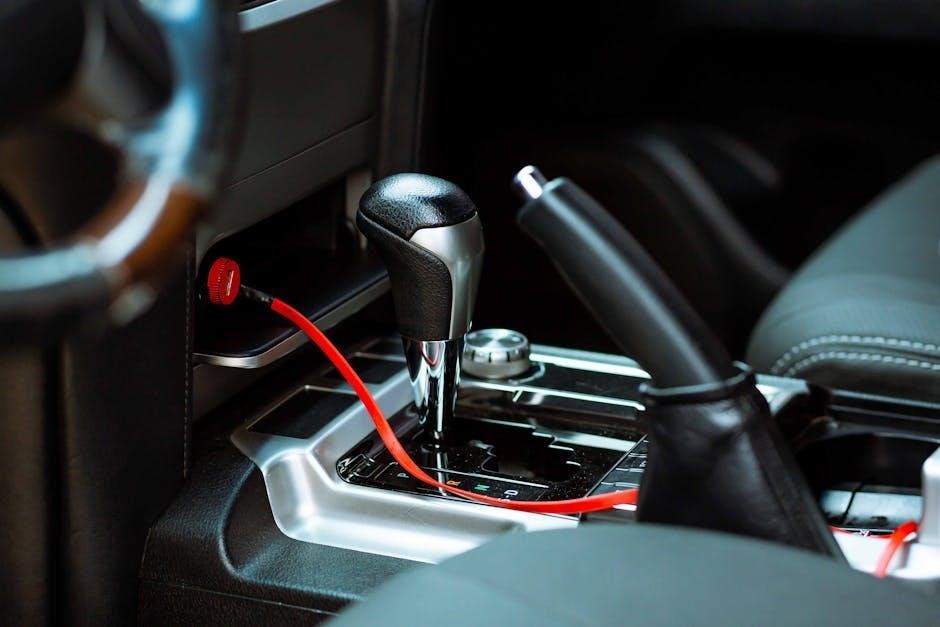
Motorcycle functionality relies heavily on its transmission, impacting rider experience through gear shifting and smooth acceleration. Understanding types is key!
The Core Function of a Motorcycle Transmission
At its heart, a motorcycle transmission’s core function is to efficiently transfer power from the engine to the rear wheel, enabling motion. It doesn’t simply deliver power; it modulates it. This modulation is achieved through a series of gears, each offering a different ratio. These ratios allow the engine to operate within its optimal RPM range, regardless of the motorcycle’s speed or the terrain.
Essentially, the transmission acts as a translator, converting the engine’s raw power into usable force for acceleration, cruising, and climbing. Without a transmission, a motorcycle would be limited to a single gear ratio, making it impractical for varied riding conditions. The system directly influences performance, handling, and the overall riding experience, making it a pivotal component of any motorcycle.
Why Understanding Transmissions Matters for Riders
For riders, grasping the fundamentals of motorcycle transmissions transcends simply shifting gears. It unlocks a deeper connection with the machine, enabling more informed riding decisions and enhanced control. Knowing how your transmission works allows you to optimize performance, selecting the appropriate gear for acceleration, fuel efficiency, or navigating challenging terrain.
Understanding the differences between transmission types – manual, automatic, and semi-automatic – is crucial when choosing a motorcycle. It impacts the riding experience, from the level of engagement to the ease of operation. Furthermore, this knowledge aids in maintenance and troubleshooting, potentially saving time and money. Ultimately, transmission awareness empowers riders to fully enjoy their motorcycles.

Types of Motorcycle Transmissions
Motorcycles utilize manual, automatic, and semi-automatic transmissions, each offering distinct advantages in performance, handling, and rider accessibility.
Manual Transmissions: The Traditional Approach
Manual transmissions represent the longstanding, traditional method for controlling a motorcycle’s power delivery. These systems demand the rider’s active participation in shifting gears, utilizing a clutch lever and foot-operated gear selector. This direct control provides a heightened sense of engagement and connection with the machine, favored by many enthusiasts.
The core of a modern motorcycle gearbox is a constant mesh design, where gears are always engaged. Riders select ratios by using the clutch to momentarily disengage power, allowing for smooth transitions. Mastering this coordination is crucial for efficient riding. While requiring skill, manual transmissions offer precise control over engine RPM and acceleration, appealing to riders who prioritize performance and a dynamic experience.
Automatic Transmissions: Ease of Use and Accessibility
Automatic transmissions are increasingly found on motorcycles, offering a simplified riding experience, particularly appealing to beginners or those seeking convenience. Unlike manual systems, these transmissions handle gear changes independently, eliminating the need for a clutch lever and manual shifting. This is often achieved through torque converters or Continuously Variable Transmissions (CVT).
Automatic systems utilize sensors and control units to monitor speed, throttle position, and other parameters, optimizing gear selection for efficient performance. While some purists may view them as less engaging, automatics provide enhanced accessibility and reduce rider fatigue. They are particularly prevalent on scooters and certain cruiser models, prioritizing ease of use over ultimate control.
Semi-Automatic Transmissions: A Blend of Both Worlds
Semi-automatic transmissions represent a compromise between the full control of a manual and the convenience of an automatic. These systems typically eliminate the need for a clutch lever for gear changes, but still require the rider to initiate shifts using foot controls. This simplifies operation while retaining a degree of rider involvement.
Often found on cruisers and some touring motorcycles, semi-automatics offer a relaxed riding experience, reducing hand fatigue during frequent stops and starts. They provide a balance – allowing riders to focus on throttle and braking without constant clutch manipulation, yet still offering direct control over gear selection. They bridge the gap for riders seeking ease without sacrificing all engagement.
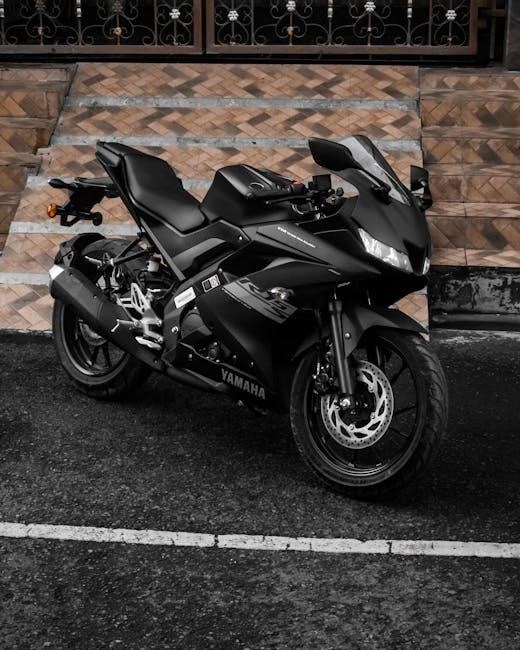
How Manual Transmissions Work
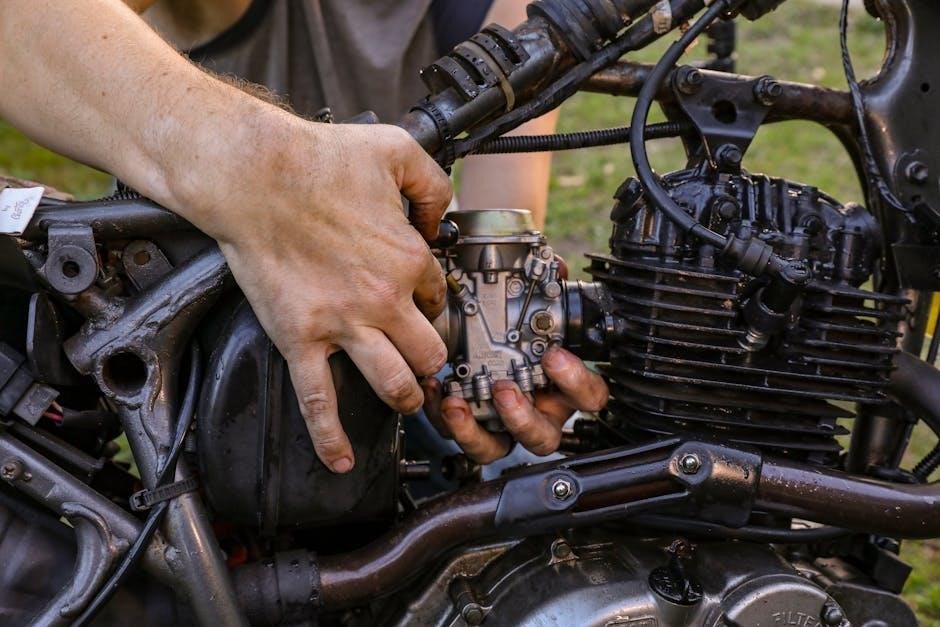
Modern motorcycle gearboxes are typically constant mesh, meaning gears are always engaged, unlike older designs needing gear sliding.
Constant Mesh Gearboxes Explained
The prevalent modern motorcycle gearbox utilizes a constant mesh design, a significant advancement over earlier systems. Unlike older gearboxes where gears physically slid along shafts to engage, constant mesh systems maintain continuous engagement between all gears. This innovative approach dramatically improves shifting smoothness and reduces wear.
Instead of directly engaging gears, a constant mesh gearbox employs dog clutches or shift forks to select the desired gear ratio. These mechanisms slide to lock specific gears to the output shaft, transferring power. This design allows for quicker, more precise shifts, as the gears aren’t needing to mesh during the change. The arrangement includes a drive gear connected to the engine, and various gear ratios are available for optimal performance across different speeds and conditions.
The Role of the Clutch in Manual Operation
In a motorcycle with a manual transmission, the clutch is absolutely essential for controlling the power transfer from the engine to the gearbox. It acts as a temporary disconnector, allowing the rider to smoothly change gears without damaging the engine or transmission components. When the clutch lever is pulled, it disengages the engine from the gearbox, interrupting the flow of power.
This momentary disconnection enables the rider to select a different gear ratio. Releasing the clutch gradually re-engages the engine, smoothly transferring power through the newly selected gear. Mastering clutch control is fundamental to riding a manual motorcycle, requiring coordination between the hand lever and the throttle for seamless acceleration and deceleration.
Gear Ratios and Their Impact on Performance
Motorcycle transmissions utilize multiple gear ratios to optimize engine RPM across various speeds and riding conditions. Lower gear ratios provide increased torque for acceleration and climbing hills, while higher ratios prioritize top speed and fuel efficiency on open roads. Each gear effectively multiplies the engine’s torque, tailoring it to the demands of the situation.
Selecting the appropriate gear ratio is crucial for maximizing performance. Staying in a low gear at high speeds strains the engine, while being in a high gear at low speeds can cause stalling. Skilled riders anticipate these needs, proactively shifting gears to maintain the engine within its optimal power band, resulting in a responsive and enjoyable ride.

How Automatic Transmissions Work
Automatic motorcycle transmissions employ torque converters or CVTs, utilizing sensors and control units to seamlessly manage gear changes for effortless riding.
Torque Converters and Continuously Variable Transmissions (CVT)
Automatic motorcycle transmissions primarily utilize two distinct technologies: torque converters and Continuously Variable Transmissions (CVTs). Torque converters, found in some larger displacement bikes, employ fluid coupling to transfer engine power, offering smooth, albeit less efficient, operation. CVTs, however, represent a more modern approach, commonly seen in scooters and some smaller displacement motorcycles.
Unlike traditional stepped gear ratios, CVTs utilize a belt-and-pulley system to provide an infinite number of gear ratios within a specific range. This allows the engine to consistently operate at its optimal RPM, maximizing efficiency and responsiveness. The system dynamically adjusts the pulley diameters based on speed and throttle input, creating a seamless power delivery. CVTs are praised for their ease of use and smooth acceleration, making them ideal for urban commuting and riders prioritizing convenience.
The Role of Sensors and Control Units
Automatic motorcycle transmissions aren’t simply mechanical systems; they heavily rely on sophisticated electronic control. A network of sensors constantly monitors crucial parameters like throttle position, engine speed, vehicle speed, and even rider input. This data is fed into a central control unit (ECU), essentially the brain of the operation.
The ECU processes this information and determines the optimal gear ratio or pulley configuration for the CVT system. It then actuates hydraulic systems or electric motors to execute the necessary adjustments. Modern systems often incorporate ride-mode selection, allowing riders to tailor the transmission’s behavior to their preferences or riding conditions. These sensors and control units ensure smooth, efficient, and responsive shifting, enhancing the overall riding experience and maximizing fuel economy.
Advantages and Disadvantages of Automatic Systems
Automatic motorcycle transmissions offer significant ease of use, particularly for new riders or those preferring a relaxed riding experience. They eliminate the need for clutch operation and gear shifting, reducing rider fatigue and simplifying operation in stop-and-go traffic. However, this convenience comes with trade-offs.
Generally, automatic systems can result in a slight performance decrease compared to manual counterparts, due to inherent inefficiencies in torque converters or CVTs. Riders may also experience less direct control over gear selection, potentially impacting responsiveness. Furthermore, automatic transmissions often present more complex and potentially costly maintenance and repair procedures compared to simpler manual systems.
Comparing Manual, Automatic, and Semi-Automatic
Motorcycle transmissions differ in performance, control, and maintenance; manual offers engagement, automatic provides ease, and semi-automatic blends both approaches effectively.
Performance Differences: Acceleration and Top Speed
Generally, manual transmissions in motorcycles historically offered a performance edge in acceleration and achieving higher top speeds, primarily due to direct power delivery and rider control over gear selection. Experienced riders can optimize engine RPMs for maximum output. However, modern automatic transmissions, particularly those utilizing advanced torque converter or CVT technology, are rapidly closing this gap.

CVT systems maintain the engine within its optimal power band, potentially delivering surprisingly quick acceleration. While traditionally, automatics might have exhibited slight losses due to the converter, advancements minimize these. Top speed limitations often stem from gearing choices rather than the transmission type itself. Ultimately, the performance difference is becoming increasingly nuanced, dependent on specific motorcycle models, engine characteristics, and the sophistication of the automatic system.
Riding Experience: Control and Engagement
Manual transmissions provide a distinctly engaging riding experience, offering riders complete control over gear selection and a direct connection to the motorcycle’s power delivery. This fosters a sense of involvement and allows for precise adjustments based on road conditions and rider preference. However, this demands constant clutch and shifter operation, which can be fatiguing, especially in congested traffic.
Automatic transmissions prioritize ease of use and reduced rider workload. They eliminate the need for manual gear changes, simplifying the riding process, particularly for beginners or those seeking a more relaxed experience. While some riders may perceive a loss of control, modern systems offer selectable modes or paddle shifters to enhance engagement. The choice ultimately depends on individual riding style and priorities.
Maintenance and Repair Considerations
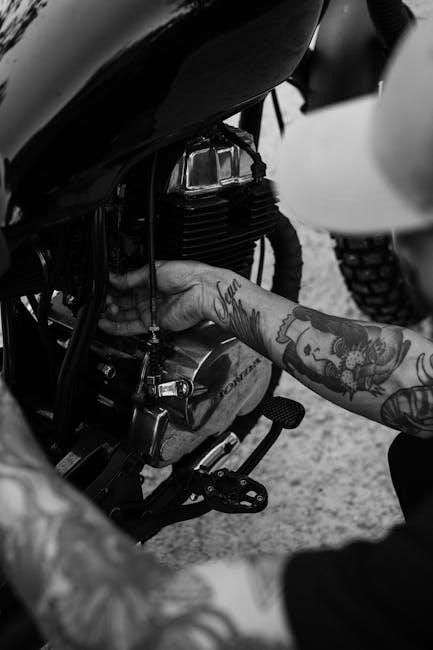
Manual transmissions, while generally robust, require periodic maintenance such as clutch adjustments and oil changes. Wear and tear on clutch plates is a common concern, necessitating eventual replacement. Skilled repairs often demand specialized tools and expertise. Automatic transmissions, with their complex internal components like torque converters or CVTs, can present more challenging and potentially costly repairs.
Diagnosing issues within an automatic system often requires specialized diagnostic equipment to interpret sensor data and control unit functions. Fluid changes are crucial for maintaining optimal performance, and neglecting this can lead to significant damage. Overall, while manual systems may involve more frequent, simpler tasks, automatic repairs tend to be more intricate and expensive when they arise.

Motorcycle Types and Transmission Choices
Motorcycle styles greatly influence transmission choices; sportbikes favor manual, cruisers offer both, and scooters commonly utilize CVTs for ease of use.
Sportbikes and Manual Transmissions
Sportbikes almost universally employ manual transmissions, a choice deeply rooted in the pursuit of performance and rider control. The direct connection offered by a manual gearbox allows skilled riders to precisely manage power delivery, crucial for aggressive cornering and track day exploits; This system enables riders to select the optimal gear for maximum acceleration and engine braking.
The engagement required with a manual transmission isn’t seen as a drawback by sportbike enthusiasts; rather, it’s an integral part of the riding experience, fostering a heightened sense of connection with the machine. While automatic options exist in some motorcycle categories, they generally don’t align with the performance-focused ethos of the sportbike world. The ability to ‘work’ the gears is considered essential for extracting the full potential of these high-performance machines;
Cruisers and Automatic/Semi-Automatic Options
Cruisers often present a broader range of transmission choices compared to sportbikes, with both manual and automatic/semi-automatic options readily available; This caters to a diverse rider base, including those prioritizing relaxed cruising over outright performance. Many cruiser riders appreciate the ease of use offered by automatic systems, particularly in stop-and-go traffic or for longer journeys where constant shifting can become fatiguing.
Semi-automatic transmissions, which eliminate the clutch lever but retain gear selection, strike a balance between convenience and control. While traditional manual transmissions remain popular among cruiser enthusiasts who enjoy a more involved riding experience, the availability of alternatives expands the appeal of this motorcycle style to a wider audience. Ultimately, the choice depends on individual preferences and riding style.
Scooters and CVTs
Scooters almost universally employ Continuously Variable Transmissions (CVTs), representing a significant departure from traditional manual gearboxes. CVTs offer a seamless, gearless riding experience, automatically adjusting the gear ratio to maintain optimal engine RPM. This simplicity makes scooters exceptionally user-friendly, particularly for novice riders or those navigating congested urban environments.
Unlike manual transmissions with discrete gear steps, CVTs provide a smooth, continuous flow of power. This is achieved through a belt-driven system and variable-diameter pulleys. The absence of shifting eliminates the need for a clutch lever, further simplifying operation. While CVTs may not offer the same level of direct control as a manual gearbox, their convenience and ease of use are defining characteristics of the scooter experience.